
Climate Change has a Negative Impact on Still Waters Too
By: Tom Schultz, RMFTU Director at Large
This past year, Colorado set records for high temperatures and low snowpacks, and we saw the impact on water flow in the Poudre, which was, at its peak, less than half the historic average during run-off. There were voluntary and mandatory closures for sections of the Colorado, Yampa, Rio Grande, Arkansas, and South Platte rivers to protect the fish. During our Youth Day Camp the electroshocking was cancelled and we had to move our fishing farther upriver to avoid water temperatures above 65 degrees F. If our record high temps and persistent drought are not the direct result of climate change, they are certainly worsened by it. And it has a deleterious impact on lentic (ponds and lakes) as well as lotic (streams) habitats and fish.
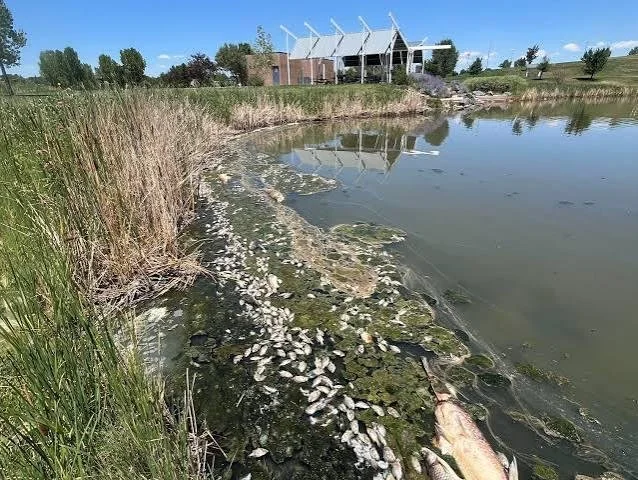
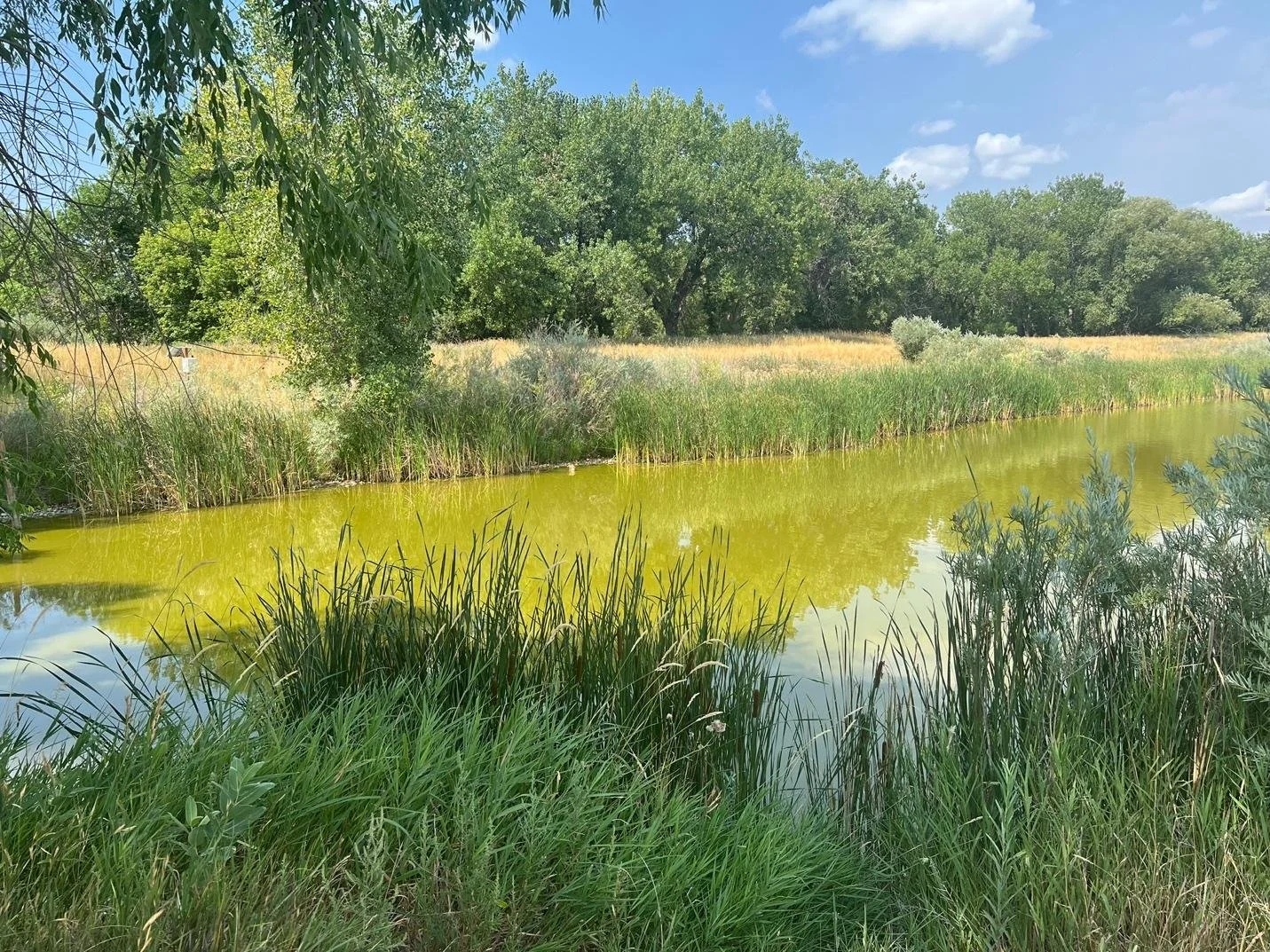
We usually start camp by teaching the campers how to cast at a local pond where they have the prospect of catching pan fish. In recent years we have used Portney Reservoir at Fossil Creek Park, but there was a massive fish kill at the park the week before camp started (photo above). The parks and wildlife staff used shovels to remove hundreds of dead fish from the banks and attributed the kill to high water temperatures. A few days later, our campers didn’t catch or even see a bluegill through the cloudy water full of algae and nutrients. This event illustrated how climate change can impact still waters, especially ponds and shallow lakes at lower elevation, by enhancing eutrophication. Warmer temperatures enhance the growth of algae blooms on the surface of ponds, which block light from reaching benthic plants and permitting photosynthesis. In addition, warm ponds become thermally stratified which prevents vertical mixing of oxygen. As plants die-off they are decomposed by aerobic microbes that further deplete oxygen available to fish and other animals. Mild conditions in winter and spring allow these algal canopies to form earlier and can suffocate the nests of bass and bluegills at the bottom of the ponds. Moreover, higher temperatures promote the growth of blue-green algae (cyanobacteria) that fix nitrogen and accelerate eutrophication. Blue-green algae also release cyanotoxins that are poisonous to fish and other animals and were responsible for the closure of Windsor Lake to this past summer. Blooms of blue-green algae have been evident at several ponds in Fort Collins in recent years such as Pelican Pond at the Running Deer Natural Areas (photo below).
When I conducted research on dragonflies and damselflies in Ohio, I noticed a dramatic decline in their populations at ponds that warmed early and became choked with algae. Damselflies are prey for trout in mountain lakes, but it is unlikely that extensive algal blooms will form unless the lakes are very shallow. Nevertheless, warmer waters will enhance eutrophication and lower oxygen concentrations, which are not good for trout even at higher elevations.